Jay Walmsley — Professional Problem Solver for Small Business
30+ years in sales, marketing and community building across APAC. I help small businesses win customers, build referral pipelines, and create partnerships that actually grow revenue.
I install the Infrastructure—Networking, Education, and Technology—that turns a "Business" into a Sovereign Territory.

"Jay Walmsley is the Chief Chaos Coordinator and the Architect of Bconnected World. After decades of navigating the friction of traditional networking, Jay codified the Bconnected Blueprint—a mandate for business owners to reclaim their data, their time, and their reputation. He doesn't just run a network; he governs an ecosystem designed for 100% closing rates and zero-waste marketing."

Professional Problem Solver
A 30-year track record in sales, marketing and local community-building — practical help, not theory.
The Reputation Loop - Stop "pitching" and start positioning. We use values-based networking to build your Authority Equity.
Institutional Mentorship- Transition from Founder to Architect through our Process Driven curriculum.
B.O.S.S. Infrastructure - Data is Sovereign. We install the systems that automate your growth and protect your time.
"Most business owners are screaming into the void of the 3% who are ready to buy today.
I build the Reputation Loop so the other 97% choose you the moment they are ready. We don't chase the rain; we build the bucket."
The +5 Standard:
Operating a high-density ecosystem across the NSW and QLD corridors.
Framework Creator:
Architect of the Reputation Loop—the strategy currently governing hundreds of high-growth businesses.
Sovereign Legacy:
Transitioning businesses from "Owner-Dependent" to "Market-Dominant."
Contact & Social — Quick Links
how to reach Jay across channels.
instagram.com/bconnected.au
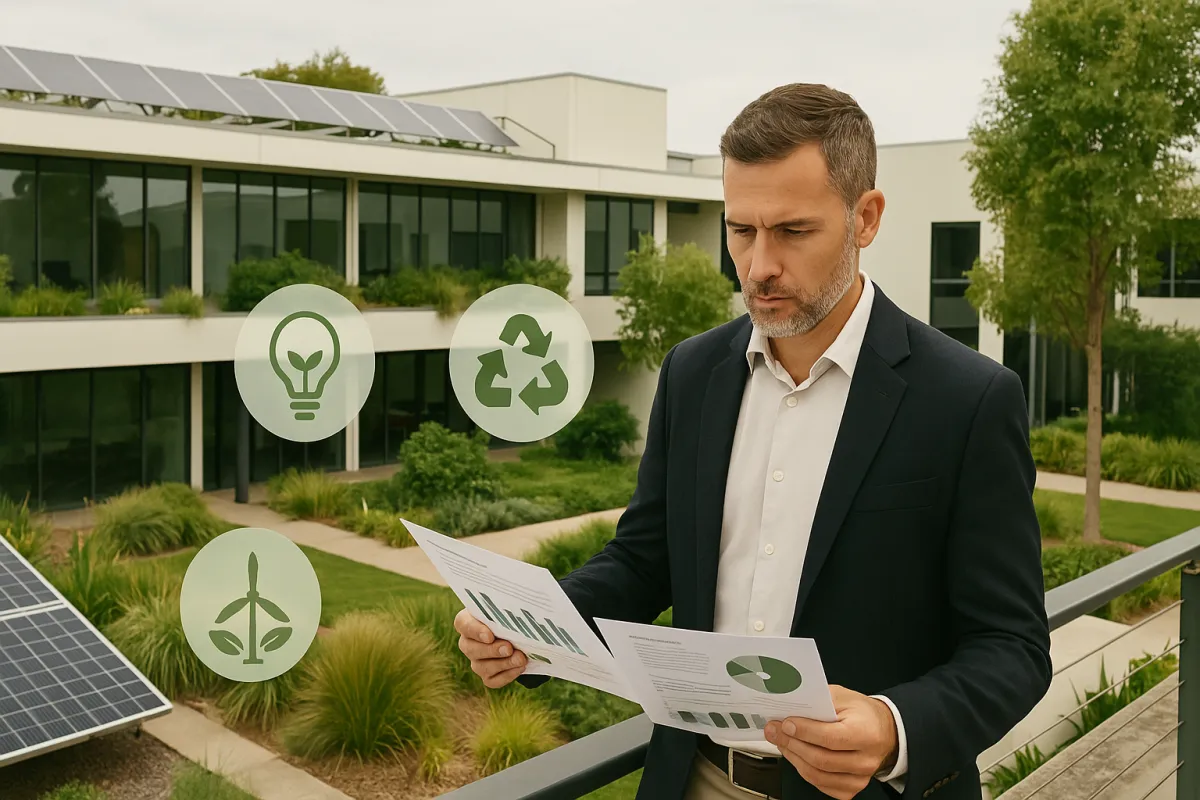
Eco-Innovation & The Bottom Line
Sustainability Is No Longer the Alternative — It Is the Advantage
For too long, environmental sustainability was framed as a cost of doing the right thing — a drag on profitability dressed up as corporate responsibility. In 2026, that framing has been definitively inverted. Sustainable resource recovery is now driving material profitability for forward-thinking Australian businesses, and the gap between early adopters and laggards is widening fast.
Beyond Greenwashing: What Eco-Innovation Actually Means
Greenwashing — the practice of making environmental claims without substance — is increasingly being called out by regulators and consumers alike. The Australian Competition and Consumer Commission has been explicit: vague sustainability claims without evidence expose businesses to legal risk. Real eco-innovation is something entirely different. It is finding ways to generate revenue from waste, reduce input costs through efficiency, and access new markets through genuine environmental performance.
Where the Profitability Is Coming From
Resource Recovery and Circular Economy Models
Businesses that have moved from linear to circular models — make, use, recover, remake — are finding significant new revenue in what was formerly waste. Manufacturers recovering and reprocessing production waste, hospitality businesses converting food waste to compost products, and tradespeople reclaiming and reselling materials are all examples of circular thinking creating new income lines.
Energy Cost Elimination
Commercial solar adoption — supercharged by federal and state incentives — is now delivering energy cost elimination for many SMEs within 4–6 years of installation. Businesses that made this investment in 2022–23 are now operating with near-zero grid energy costs while their competitors pay record commercial rates.
Green Procurement Advantages
Enterprise and government buyers are increasingly mandating environmental performance from their supply chains. SMEs with documented sustainability credentials — energy efficiency, waste reduction, ethical sourcing — are qualifying for procurement opportunities that are systematically closed to businesses without them.
Consumer Premium
Research confirms that a meaningful proportion of Australian consumers will pay a price premium for verifiably sustainable products and services. This is not sentiment — it is captured in average transaction values and customer lifetime value data from businesses with strong sustainability narratives.
Making the Business Case
- Energy audit — identify your biggest consumption points and the fastest-payback efficiency investments.
- Waste audit — map your waste streams and identify recovery, resale, or reprocessing opportunities.
- Supply chain review — assess where sustainable sourcing alternatives exist at competitive cost.
- Certification — explore whether formal sustainability certification opens procurement doors worth pursuing.
Building a sustainable business is building a resilient one. Reputation Loop helps you create the infrastructure that drives long-term profitability. Talk to us.