Jay Walmsley — Professional Problem Solver for Small Business
30+ years in sales, marketing and community building across APAC. I help small businesses win customers, build referral pipelines, and create partnerships that actually grow revenue.
I install the Infrastructure—Networking, Education, and Technology—that turns a "Business" into a Sovereign Territory.

"Jay Walmsley is the Chief Chaos Coordinator and the Architect of Bconnected World. After decades of navigating the friction of traditional networking, Jay codified the Bconnected Blueprint—a mandate for business owners to reclaim their data, their time, and their reputation. He doesn't just run a network; he governs an ecosystem designed for 100% closing rates and zero-waste marketing."

Professional Problem Solver
A 30-year track record in sales, marketing and local community-building — practical help, not theory.
The Reputation Loop - Stop "pitching" and start positioning. We use values-based networking to build your Authority Equity.
Institutional Mentorship- Transition from Founder to Architect through our Process Driven curriculum.
B.O.S.S. Infrastructure - Data is Sovereign. We install the systems that automate your growth and protect your time.
"Most business owners are screaming into the void of the 3% who are ready to buy today.
I build the Reputation Loop so the other 97% choose you the moment they are ready. We don't chase the rain; we build the bucket."
The +5 Standard:
Operating a high-density ecosystem across the NSW and QLD corridors.
Framework Creator:
Architect of the Reputation Loop—the strategy currently governing hundreds of high-growth businesses.
Sovereign Legacy:
Transitioning businesses from "Owner-Dependent" to "Market-Dominant."
Contact & Social — Quick Links
how to reach Jay across channels.
instagram.com/bconnected.au

Why Your Drive Fails: Build Better Strategies
Leadership, Performance, Business Strategy
Why Your “Drive” Is Failing You (and What to Build Instead)
Sheer determination carries you only so far—when stakes spike or sleep vanishes, willpower collapses. For growing businesses and agencies, this isn’t a personal flaw; it’s a systems problem. This guide unpacks why grit alone betrays you, where it reliably breaks, and what to build in its place.
Why Grit Alone Betrays You
In business culture, “drive” is treated like a superpower. Founders brag about 80-hour weeks, agency leaders wear burnout like a badge, and teams quietly assume that if they just care enough, they can outrun chaos. Reality is harsher: willpower is a depleting resource, not a permanent operating system.
For leaders and agency owners, that depletion shows up in familiar ways: erratic decision-making at the end of the day, important but not urgent projects slipping for months, and “we’ll fix this after the launch” turning into a permanent mantra. You’re not lazy; you’re relying on the wrong engine. Grit works for sprints. Businesses and agencies run marathons.
📌 Key Takeaway: If your growth plan depends on everyone “trying harder,” you don’t have a growth plan—you have a hope strategy.
Where Drive Breaks in Businesses and Agencies
There are predictable pressure points where determination stops working, no matter how committed your team is. If you lead a business or agency, you’ll recognize these fault lines:
When stakes spike. Big pitches, product launches, or high-budget campaigns compress timelines and raise expectations. Under pressure, people default to old habits, not best intentions. Without clear processes, your team improvises—and inconsistency quietly erodes client trust.
When sleep vanishes. Late nights and weekend pushes feel heroic once. By the third “emergency” month, quality slips, email tone sharpens, and your best people start scanning LinkedIn. Drive cannot compensate for chronic exhaustion.
When complexity multiplies. More clients, more deliverables, more channels, more tools. What used to live in one founder’s head now has to live across 20 people. If knowledge transfer relies on hallway conversations and Slack threads, your “grit” is just covering for missing structure.
When leadership is stretched thin. As you scale, leaders become approval bottlenecks. They jump from crisis to crisis, making reactive calls instead of strategic ones. Even the most driven director cannot outwork a broken decision pipeline.
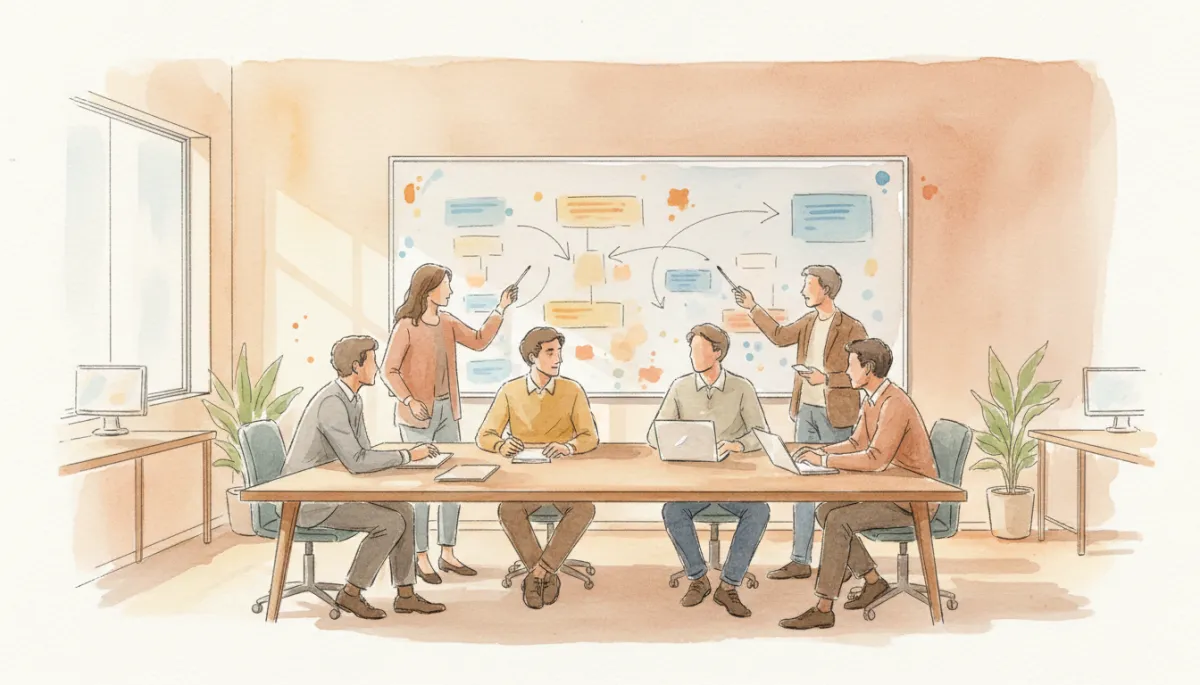
Systems turn individual heroics into repeatable, team-wide performance.
What to Build Instead: Systems That Don’t Rely on Heroics
The opposite of grit isn’t apathy; it’s architecture. For businesses and agencies, that means designing an environment where the default path is the right path—even on your team’s worst day. Three shifts make the difference:
From memory to playbooks. Document how you win pitches, launch campaigns, and recover failing projects. Short, visual, and searchable beats long, dusty manuals. When the pressure hits, people should reach for a playbook, not a pep talk.
From heroics to triggers. Build simple triggers into your operations: weekly pipeline reviews, pre-flight checklists before launch, red-flag thresholds for workload. When a trigger fires, the next action is predefined, not debated in a 10-person meeting.
From “try harder” to capacity by design. Protect focus time, cap active projects per person, and align targets with actual bandwidth. It’s better to promise less and deliver flawlessly than to promise everything and survive on adrenaline.
💡 Pro Tip: Ask your leadership team, “If everyone’s willpower dropped by half tomorrow, which of our results would collapse first?” That’s where you need a system, not another motivational speech.
The Real Competitive Edge
In a crowded market, most agencies and growth-focused businesses are still powered by a handful of overextended high performers. They grow fast, then stall—or implode—because their success was built on effort, not infrastructure. Your edge is not having people who care more; it’s building systems that need less from them to deliver exceptional work.
Grit got you off the ground. To scale sustainably, you need predictable processes, clear decision rules, and capacity that doesn’t depend on caffeine and courage. When you design for your team’s most exhausted day, you unlock your best results on their best days—and that’s where real, defensible growth lives.